
With A Comparative Journey Through Two Traditional Viet Sun Sheng Pu’er
When I first saw Steve’s photos, his Vietnam, made of fiery red sunsets, emerald pastures, and motorcycles whose tire treads were mere memories, I was left hanging in a sense of emptiness, of existential incompleteness tied to never having visited those places. Looking at those shots felt like peering into a parallel world, embraced by a sort of ontological nostalgia.
The snapshots of Tả Củ Tỷ, the “Big Rice Field,” reveal the truth of a borderland world, of earth and blood, behind the major cities, whose distant lights appear like a sarcastic smile with pearl-white teeth. Then the horizon arches, growing increasingly vertical, rising further along the crumbling clay arteries, beyond the rice paddies, moments ago drained, now swollen with rain and reflecting the vastness of the sky.
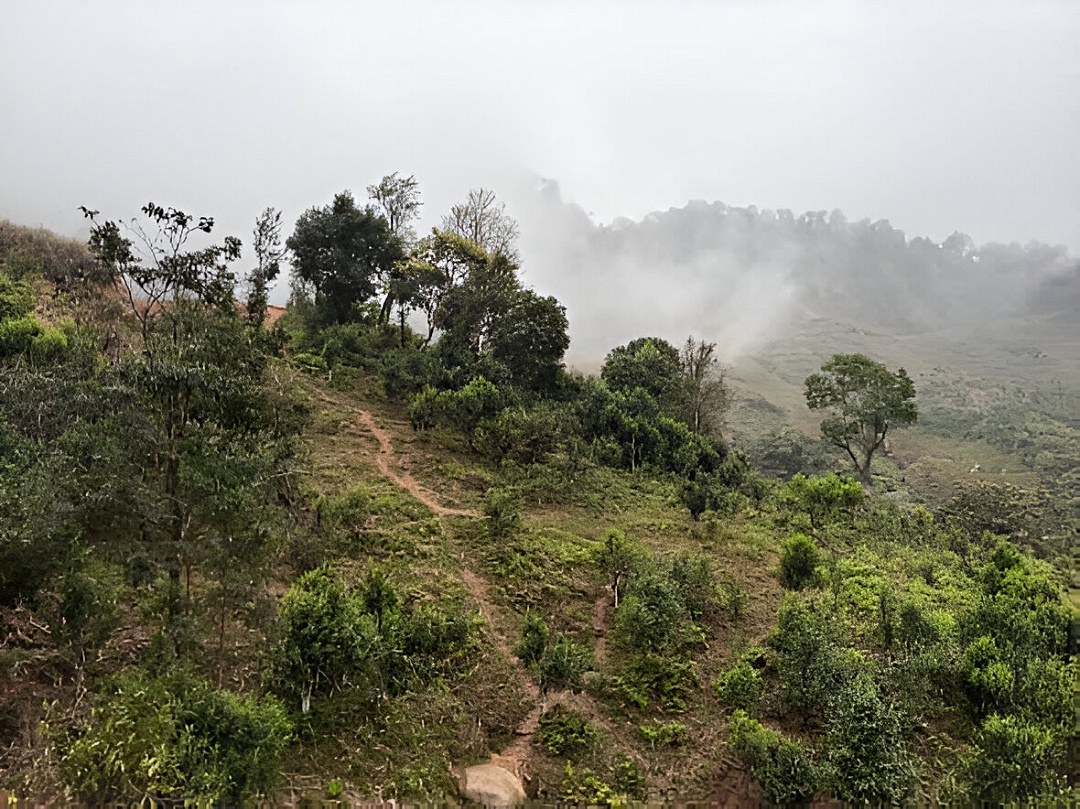
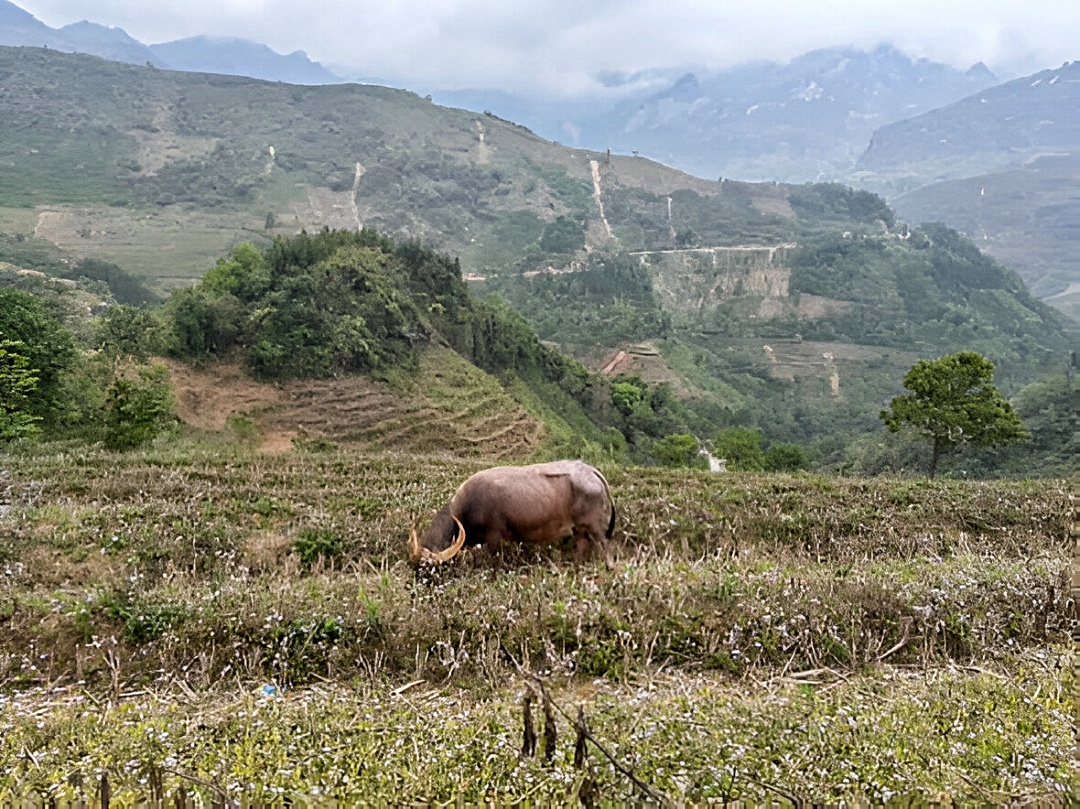
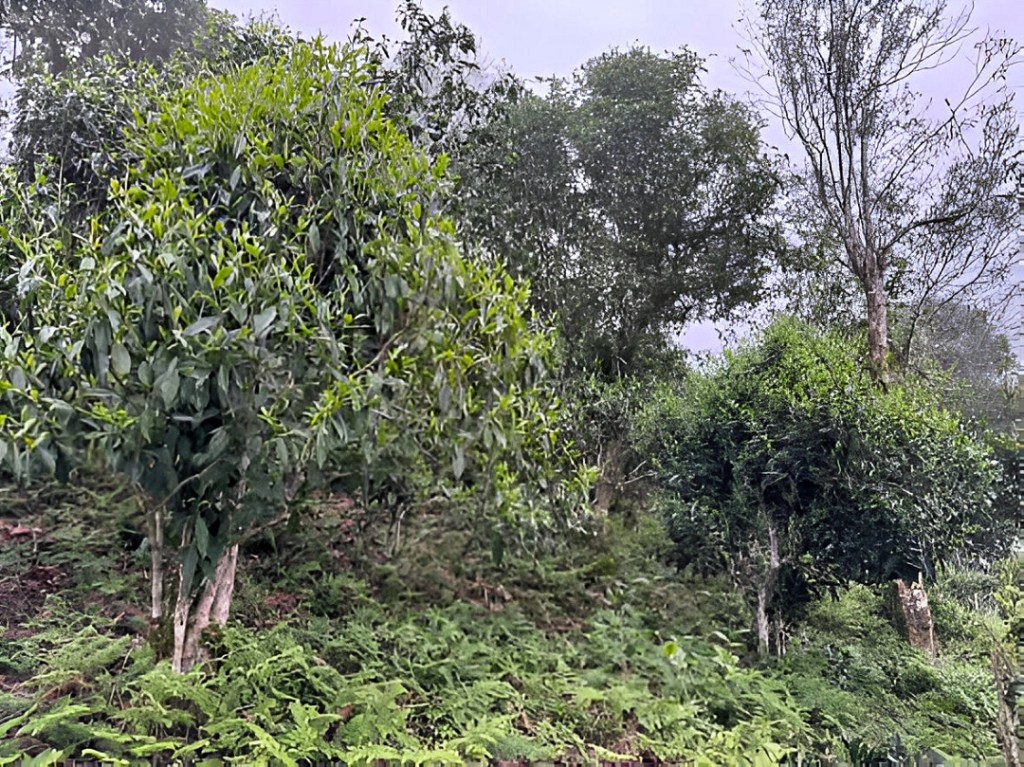
Here, every tree, every tea leaf, every sensory experience is an imperfect shadow of an eternal idea. This is where one of the best Pu’er teas in Vietnam is made, loaded with a near-theological sincerity, vibrant in every vintage, soft, flowery, and endlessly mineral. The shengs of Tả Củ Tỷ are like the Rieslings of the Mosel, a form of resistance against the trials the gods impose through the elements. They express the same minerality and layered memory. But while Riesling whispers sweet notes and sings praises like a Romantic poet on a summer evening surrounded by Viennese Jugendstil, the Pu’er of Tả Củ Tỷ elegantly drags you down a muddy mule path under relentless monsoon rain. In both, there is the same sharp and ruthless beauty, but whereas the Mosel wines evoke the rarefied skies of Chagall, suspended in uncorrupted blue, in Tả Củ Tỷ the image offers no redemption, it demands confrontation. Time here doesn’t pass, it presses. The landscapes are those painted by Turner, but not the sublime, ethereal artist of the Dover sea, rather the feverish, visionary Turner of his final years, where light shatters into curls of shadow and smoke, and the scene dissolves into an intensified, nebulous inner reality.
The province of Lào Cai hosts a pedological diversity of rare complexity, the result of interactions between lithology, comprising metamorphic and sedimentary bedrocks, and a harsh topography shaped by steep slopes and variable altitudes ranging from the Red River’s lowlands to peaks shrouded in mist. In this living landscape, far from documentary clichés, ten major soil groups intertwine, distributed into around thirty subcategories, reflecting an extreme variety of geomorphological, climatic, and land-use conditions. In this mosaic, most fall into the categories of alluvial soils, minimally developed, fertile, fine-textured, laid across the Red River’s floodplains. As elevation rises, submontane zones host deep ferralitic soils, with aggressive pedoenvironments and reddish-brown hues. Then come humic soils on red-yellow parent rock, which inhabit the gentler slopes of the Sa Pa and Bắc Hà districts, ideal for mountain orchards and medicinal plants, the same ones that Dao grandmothers will grant you for a spider bite, heartbreak, or to recover quicker from the drunken night before. Higher still, where the air thins, the sun burns your skin, and geology shifts from academic subject to a lesson in humility, you find the brown, acidic forest soils typical of high-altitude tea forests, marked by thick organic horizons and excellent water retention, where the labor is real, marketing fades, and matter begins. The higher you go, the more essential the soil becomes, and the mountain strips you of every excess you thought you needed.
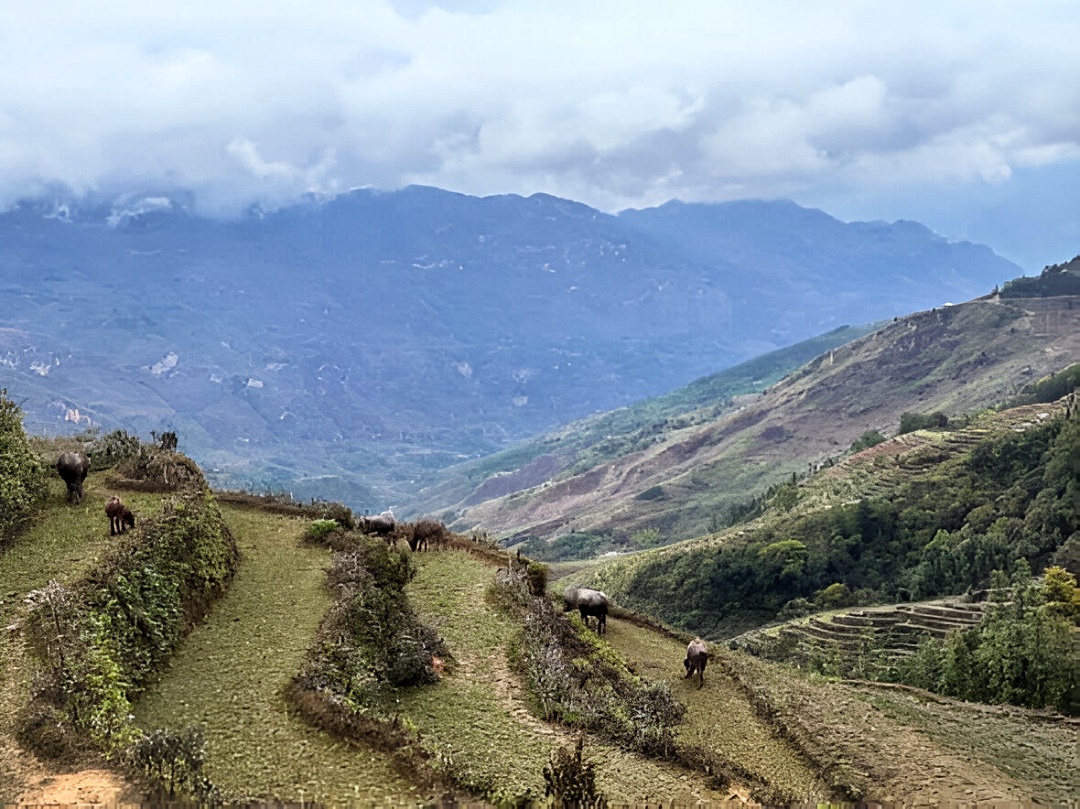
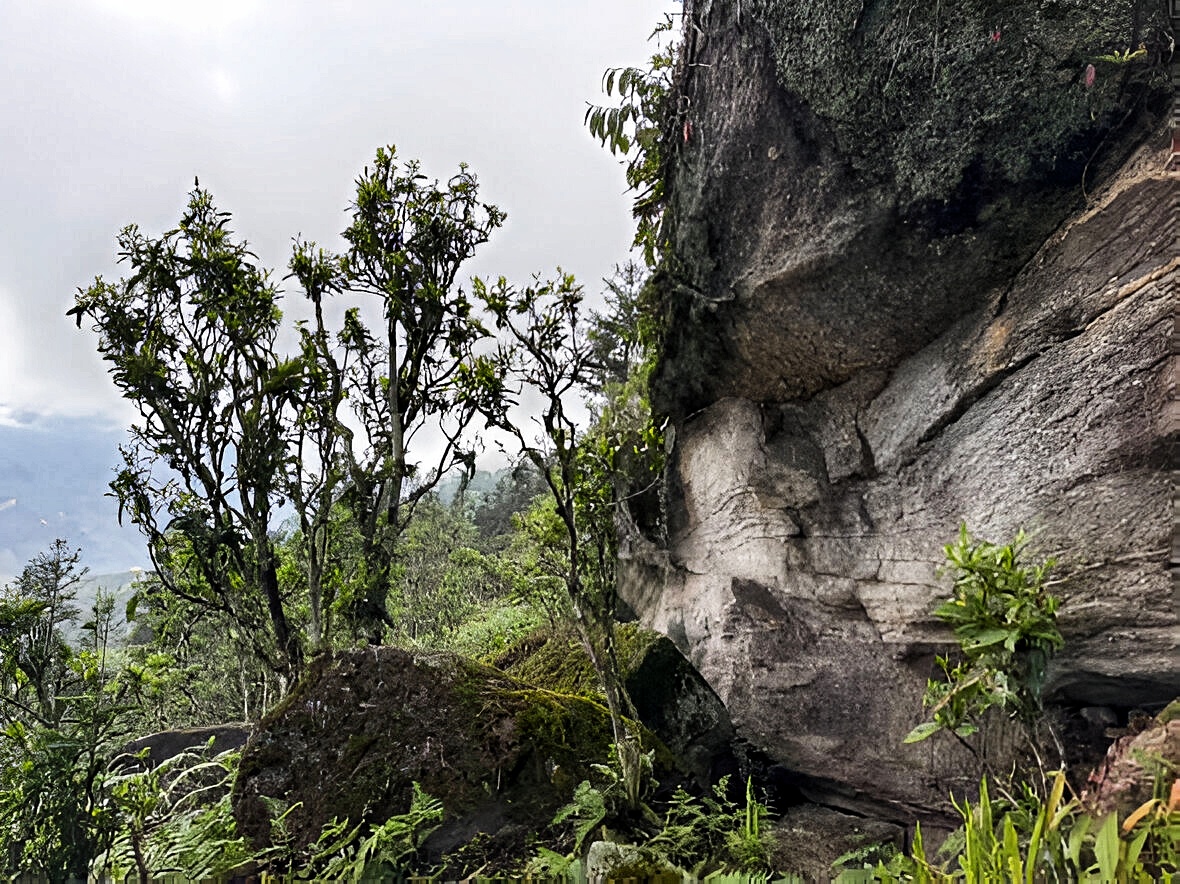
Since ancient times, the region now known as Lào Cai has been a living tapestry of peoples from the H’Mông–Dao (including Mông, Dao, and Phù Lá) and the Kra-Dai groups (including Tày and Nùng). The Phù Lá migrated from Yunnan during the waves of the 15th and 17th centuries and opened the Lào Cai–Hekou pass, a crossroads for southern Chinese merchants and Tibetan fugitives, military settlers, and Tonkinese textile makers. Salt, tea, silk, and livestock crossed gorges and cliffs towards the Red River Delta, in exchange for rice, gourds, rare spices, and La Chi cotton fabrics. The trade route stayed open for five centuries, until the war with China in 1979. Tả Củ Tỷ and the entire Bắc Hà highland area have always been a “slippery edge” of the Vietnamese empire: formally part of Đại Việt, but in practice governed by local clan leaders and traversed by cross-border trade routes. Only with the expansion of the Nguyễn dynasty and, later, the arrival of the French, did state control become more pervasive. But that’s another story.
The forests of Tả Củ Tỷ possess a mad, honest allure. The color palette feels like something conjured by a cosmic hangover, while the mist moves slowly, like cigarette smoke drifting in a closed room. Its radiance isn’t the kind choreographed by a cheerful smile or Caribbean hues, but rather the disarming kind of beauty of a woman who’s cried all night and then looks at you at dawn, bare-faced. A fleeting moment of rare grace, allowed to linger briefly in the interlude of suffering, the kind of incorruptible, visceral visual rapture that doesn’t let you lie.
These dusty clay paths have been trodden by pack leaders, smugglers, and warriors. They’ve witnessed rites of passage and the initiations of Dao and Mông shamans, the veneration and sacred songs of the Tày, and offered shelter for markets and negotiations, for secrets traded with Xôi ngũ sắc, and for boisterous jokes between bowls of Thang Cọ and glasses of rice wine.
From this thread of bare earth echoes the sound of an absolute beauty that refracts through the contingent, like a bridge between the transitory and the infinite. I could be among them now, being filmed as I say that it is in the resilient rurality of these villages that Heidegger’s concept of Gelassenheit unfolds, that is, a spiritual disposition of letting-be, an openness to the essence of things, and, as he interprets in his Parmenides, how it reveals itself through history and daily life. But at some point, a scooter would honk to urge me out of the way, and it would be right to do so. So, thousands of kilometers away, I conclude by saying that there, people have never betrayed their own history, even while embracing change, reminding us that the truth of a place is not measured by the order of its exotic scenery, nor through a mere anthropological lens. Especially not in that land, Vietnam, daughter of the sky, immersed in the dreamlike dimension of its eternity.

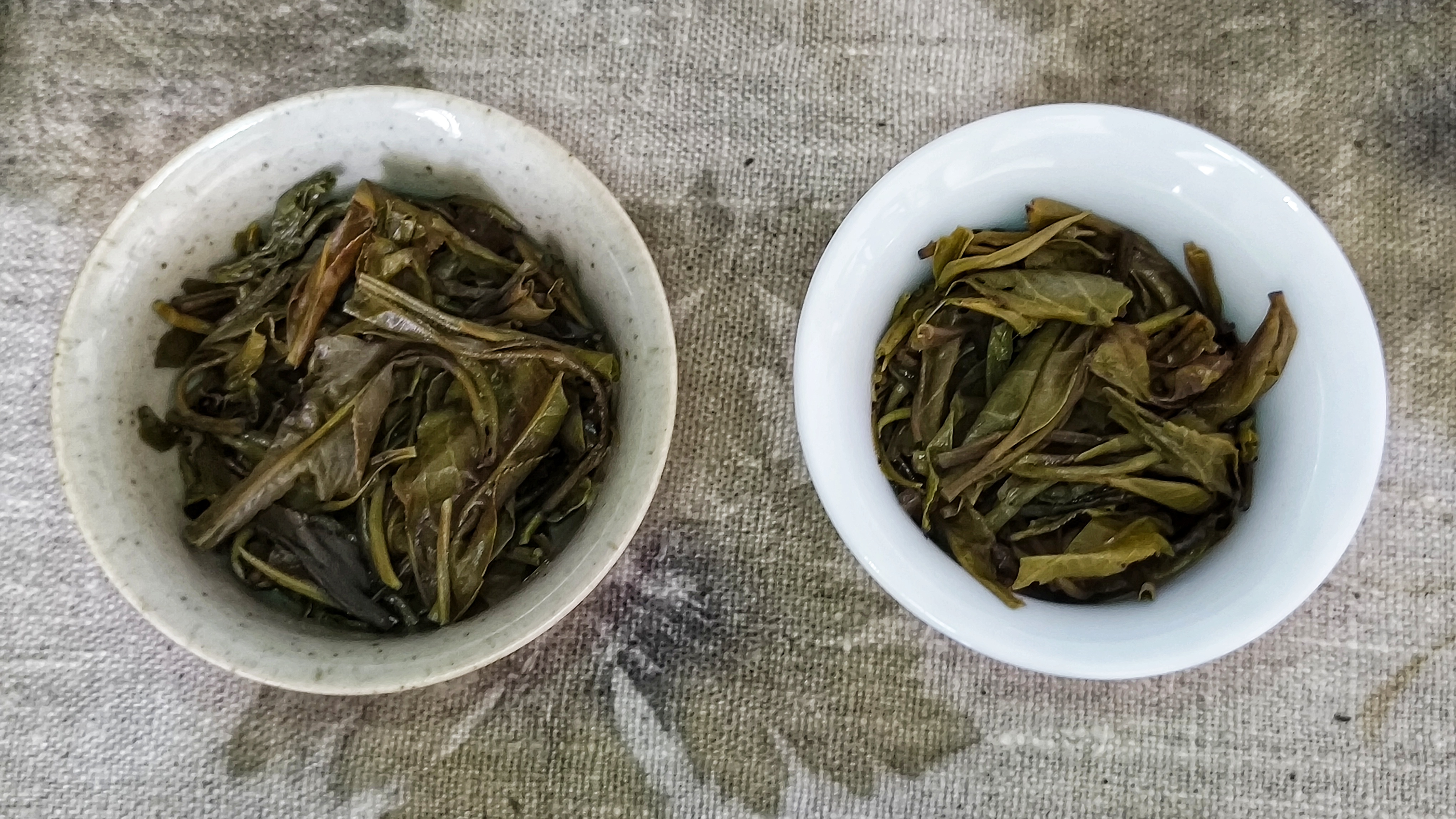
On the left: Tả Củ Tỷ Sheng Pu’er Autumn 2023, medium aged, old and ancient trees
On the right: Tả Củ Tỷ Sheng Pu’er Spring 2024, old and ancient trees
Viet Sun Tả Củ Tỷ Sheng Pu’er Autumn 2023
The autumn version comes from a mixture of medium-aged, old, and ancient trees growing at different altitudes and on diverse soils. It presents itself with a mature register, more oxidized, and the difference from the spring version is indeed perceptible. The autumn leaves are darker, as confirmed by the liquor, a decidedly golden hue, with shades that recall Turner’s Goethe’s Theory, to stay on theme. While the wet leaves retain a line of continuity with the orchid and apricot notes typical of the spring harvest, here honeyed tones and hazelnut hints emerge more clearly, intertwined with musky nuances, dried fruit and pan-fried greens memories, with lightly buttery accents.
Although vibrant, the sip is clearly more fragile, with a more hesitant body compared to the spring tea. Its huigan is more restrained and immediate, with sharper astringency, although the impression remains of a sweet brew with well-calibrated bitterness. Rather than floral aspects, the palate leans more toward raisin, apricot, and unmistakably honeyed flavors. The mouthfeel is less viscous, with more modest intensity and persistence, yet it remains decidedly interesting for this theater of contrasts between warm, comforting fragrances and still grassy notes, between roundness and sharpness. It is a tea that certainly holds aging potential, but is already quite enjoyable in its youth.
Viet Sun Tả Củ Tỷ Sheng Pu’er Spring 2024
I believe there are four essential elements that make a Pu’er good, if I were pressed to summarize: aroma, the taste of the mountain, excellent viscosity and huigan. And all of them are here. There are no substantial altitude differences compared to the autumn counterpart, but here we have leaves only from old and ancient trees. They appear lighter, less reddened, the liquor takes on a straw-yellow hue, and the aroma recalls that of orchid, not the florist’s kind, but the wild one you stumble upon between the cracks of limestone, with scents of an intensely floral field and apricots.
Framing it is a very light smoky note that fades quickly over the course of the session, while a constant forest-like tone remains, along with wet stone elements that greatly define the olfactory texture. The character is decidedly more intense, more subtly grassy and floral, geared toward evolution over time. The liquor is beautifully smooth, sustained by light bitterness and astringency, which pave the way for a huigan that is reactive, quick, enveloping, and progressively expands from throat to palate.
As the session continues, it constantly reminds me of some Pu’er from Gedeng, but even more boldly floral and with a distinctly mineral signature. The huigan and the persistence of the aftertaste are undoubtedly the pillars of the tasting experience, two traits that make you forget many gushu from beyond the border.
Note: All the stunning photos of the passages were taken by Steve (Viet Sun)

 Wild Harvested
Leave a comment