
The question most of you are probably asking after the philosophical and ideological discourse of the first part is: how important can the implementation of a system based on rural architecture be in economic terms?
Quite frankly, I am not an expert in land finance, nor do I wish to replace those who work in that field. I’m a food technologist: I work with food, I analyze problems and find solutions related to it. By nature, I tend to understand why mechanisms jam and how to intervene to restore their proper function. So what follows is an analysis based on much of the literature I’ve explored over the past few years, not professionally, but driven by a genuine desire to understand and a deep personal curiosity. I’ve never liked pointing out problems and then standing back while others fix them, even when I had no idea where to start to piece things together. That’s why you won’t find ready-made solutions here, but rather some reference points for building your own awareness, an awareness that can only grow.
Before understanding how vital it is to support rural architecture and safeguard architectural cultural heritage, we must grasp how important the real estate market is for China’s economic growth.
China’s economic development has always followed a dual-track system. Without public housing, no “transformation” would have been feasible or even conceivable. In this model, the tracks are not parallel but sequential: public housing comes first, followed by the market. As a result, the health of the second depends entirely on the first. This is the main difference between China and Singapore, or China and the rest of the world and it explains why housing policy has had such a strong impact in China. It also helps us understand how the greatest forms of resilience, whether in the face of internal crises or external shocks, were triggered by shifts in the central government’s approach to real estate. First in 1990, with the provisional regulation regarding the granting and transfer of state land-use rights in urban areas; then the 1998 housing reform that allowed a huge number of families to acquire necessary goods, including homes, laying the foundations for the current urban middle class. Finally, the pre-2008 policies that prevented China from being swallowed up by the global financial crisis, such as the mandatory implementation of the “831” policy on land sold through public bidding, which brought hundreds of billions of RMB in land revenues to the central and local governments in just a few years.
The potential economic benefits of preserving rural ecology and traditional building go beyond increasing real estate value, with a possible 15–25% per-square-meter increase in value (Prince’s Foundation). Neighborhoods designed with traditional planning approaches also tend to maintain or increase in value during times of crisis (New Urbanism Report).
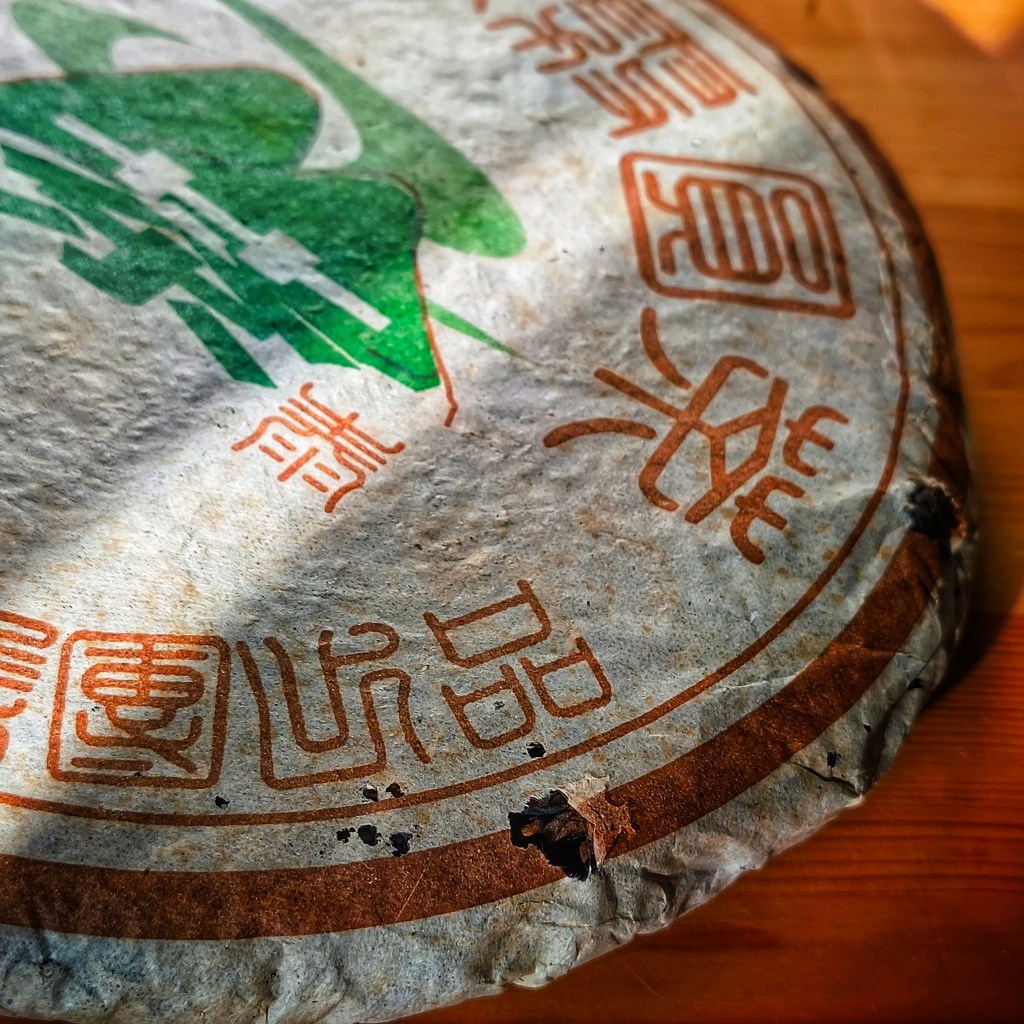
We know that China is currently experiencing a serious real estate crash. Do you remember an old article I wrote about the Pu’er tea price crisis this past spring? There might be a connection, and I’ll briefly get to the point.
The link between China’s real estate crisis and the issue of rural architecture and place-based value, though seemingly distant, is actually a deep and structural connection. It touches the very foundations of the economy, society and the relationship between built space and capital. The key lies in how value is created through space. Modern China built its economic miracle on the urban real estate market; now, to overcome the crisis, it must find a new paradigm for value creation, one that could partially come from rural areas. To be clear, real estate speculation is a necessary evil*, albeit one that should be pursued with containment logic. But in rural contexts, this is often not the core issue.
In the article mentioned earlier, I highlighted some potential dangers generated by unchecked price speculation in the Pu’er market, such as a chain of farmer defaults that could cause banks and lenders to restrict credit in an effort to avoid adverse selection (i.e. funding risky projects). That said, there is often a mistaken perception that the essence of real estate lies solely in the buying and selling of land and homes. In reality, the core function of the sector is not so much direct investment, but its ability to generate credit. Any economic initiative can obtain financing if supported by adequate cash flows (as has been the case with Pu’er-related activities over the past two decades); however, the actual ability to secure capital largely depends on having tangible collateral. In this context, real estate plays a crucial role as an asset suitable to serve as a guarantee. Therefore, the fundamental function of the real estate market is to attribute value to real assets and give them liquidity, making them effective tools for activating financial circuits. Equipping villages with targeted credit logic, cultural rootedness, and non-speculative real estate enhancement can thus be a form of resilience in less prosperous times.
We also know that tourism in well-preserved rural Chinese villages (e.g., Hongcun, Xidi, Zhouzhuang, as well as traditional urban contexts in Yunnan such as Wengji, Nuogan, Shaxi) has led to significant increases in local GDP (China Statistical Yearbook, 2023). The use of native raw materials promotes agricultural biodiversity and increases productivity in mixed systems (agroforestry), while boosting employment in traditional crafts, if supported by local policies that are decoupled from the tea market. All of this fits perfectly within the problematic context of regions heavily reliant on a single crop, where workers often lack transferable skills and economic diversification is limited. When only one productive asset exists (like Pu’er), price volatility threatens not just income but also families’ access to credit, potentially leading to systemic financial exclusion. In this sense, rural architecture represents a form of territorial capital that generates tangible, enduring value, fostering access to local microcredit, creating jobs in restoration, craftsmanship, and tourism, and supporting integrated development. It serves as a catalyst for growth that respects cultural identity without exploiting or commercializing it.
*
Speculation is a necessary evil: to increase the housing supply, real estate must be a profitable investment and that means accepting a certain level of speculation: those who build or buy to resell must earn a profit. Also, there is a need to make real estate more liquid, in a sense, it must become a tradable asset and form of collateral. It doesn’t matter whether housing prices are soaring or steadily increasing; what matters is that there’s a sufficient perception of that trend. Without this logic, no one would invest in housing on a large scale. If speculation is curbed too strictly (to protect the right to housing), it disincentivizes investment in the real estate sector. As a result, less capital is deployed, construction slows, employment drops and the economy suffers. Whether the State or the market seeks to ensure housing for all, it often does so through financial instruments like incentives, mortgages, subsidies, market liberalization or low interest rates. This leads to a dilemma: the more accessible you try to make housing, the more you expose it to speculative forces. Therefore, a certain degree of speculation must be acknowledged and managed but not entirely eliminated, otherwise the system risks coming to a standstill. And that is one of the key issues behind China’s current real estate short-circuit.
 Wild Harvested
Leave a comment